

Welcome to our CSS Literacy toolbox
Practical, reflective methods to make power visible in Inter- and transdisciplinary collaborations.
Why this matters
While many tools support collaboration and natural science literacy, tools that focus on critical social science literacy—especially with respect to hidden power dynamics—are still rare. Yet these power dynamics shape what is accepted as valid knowledge, which voices are heard, and which solutions become possible in mainstream science and society.
Our perspective
Critical social science sees hidden power not as a side issue, but as central to achieving meaningful and transformative societal change.
What this enables
Our tools support researchers and practitioners in identifying, reflecting on, and engaging with power dynamics embedded in institutions, collaboration processes, and knowledge systems.
Before you explore the toolbox.
Types of Power Our Tools Engage With
Our tools are grounded in these two types of power.
A) Discursive Power
-
Power that acts through discourses (how something is talked about and represented), which shape what’s visible, valued, and legitimized.
-
Influences whose knowledge counts and which solutions are thinkable.
-
Includes framing power.
B) Structural Power
-
Power that is reinforced through societal structures and institutions, rules, norms, and everyday practices.
-
Includes:
-
Operational Power: formal/informal rights and access
-
Rule-making Power: “power to make rules… and to bias rules towards certain values” (p. 3)
-

Source: Arias-Arévalo et al. (2023), p.3
Translating Transformations Tools
Tools to make power visible.
➤ Best used at the beginning of your project.
➤ Our tools are well-tested, but we sometimes update them when new insights emerge. We welcome your feedback and ideas to help us make them even more useful.

The Power of Truth
Explore how power shapes what counts as truth.
This tool encourages reflection on different perspectives and the relationship between knowledge/power and truth.
⏱ 25–40 min | Discursive & Structural Power

The Power in Change
Reflect on how proposed solutions shift or maintain power relations.
This tool helps understand transformative change by critically assessing proposed solutions to societal and environmental challenges. It encourages reflection on who benefits, which power relations persist, and which must shift for change to be truly transformative.
⏱ 80-90 min | Discursive & Structural Power

Picture this: Seeing through Epistemic Lenses
Engage with flexible epistemic identities.
This tool helps explore how natural and social scientists approach knowledge differently. It promotes interdisciplinary perspectives, critical awareness, and respect for differences in epistemic identity.
⏱ 70 min | Discursive Power (Framing)

The Power of Representation
Practice active listening as a way to reflect on how representation shapes power.
This tool supports reflections on how being represented, or not, sends subtle but powerful messages about whose perspectives matter. It encourages exploration of how these dynamics influence who gets to shape a shared future.
⏱ 15–20 min | Structural Power

The Power of Inclusion
Reflect on inclusion beyond presence.
This tool raises awareness and helps reflect on whether inclusion in projects is merely symbolic or genuinely participatory, and what it takes to shift toward more active involvement.
⏱ 70 min | Structural Power (Operational)
Complementary Toolboxes
Looking for tools to support collaboration across science and practice?
Our tools can both complement and be complemented by other methods and toolboxes. Many existing resources support collaboration in ITD research and teaching. However, they often do not explicitly address power relations in research collaborations and their outcomes—particularly in relation to problem definition. Our toolbox builds on these approaches by adding a specific focus on power.
Complementary ITD Collaboration Toolkits
Below you will find selected toolkits and methods that we recommend using alongside our power-focused toolbox. In particular, we recommend the td-net toolbox, which offers a broad collection of methods for structuring collaboration between academic and non-academic actors. It supports co-design processes, joint research, and the development of impact across diverse contexts.
Complementary Tools on Power
➤ coming soon...
We highly recommend using the td-net toolbox alongside our CSS Literacy Toolbox for a complementary toolkit.
The td-net toolbox offers a rich collection of methods designed to guide and structure collaboration between academic experts and practitioners. It supports the co-development of projects, joint research, and strategies for creating impact within diverse, cross-sector groups.
Welcome to our toolbox
The CSS Literacy Toolbox offers tools developed to support critical reflection and practice within TTCIs. While tools supporting natural science literacy or collaboration across disciplines and stakeholders are more widely available, tools focused on CSS — especially for confronting discursive and structural power — remain rare.
Our toolbox addresses this gap by offering practical, reflective methods to help researchers and practitioners identify, engage with, and respond to power dynamics embedded in institutions, processes, and knowledge systems. CSS perspectives view these dynamics as central to achieving transformative change.
Before you explore the toolbox.
Types of Power Our Tools Engage With
🗣️ Discursive Power
-
Power that acts through discourses (how something is talked about and represented), which shape what’s visible, valued, and legitimized.
-
Influences whose knowledge counts and which solutions are thinkable.
-
Includes framing power.
🏛️ Structural Power
-
Power that is reinforced through societal structures and institutions, rules, norms, and everyday practices.
-
Includes:
-
Operational Power — formal/informal rights and access
-
Rule-making Power — “power to make rules… and to bias rules towards certain values” (p. 3)
-
Source: Arias-Arévalo et al. (2023), p.3


CSS Literacy TooLbox.
Explore the tools*
* These tools are well tested but we sometimes update them when new insights emerge — we welcome your feedback and ideas for improvement.

The Power in Change
Reflect on how proposed solutions shift or maintain power relations.
This tool supports participants in understanding transformative change by critically assessing proposed solutions to societal and environmental challenges. It encourages reflection on who benefits, which power relations persist, and which must shift for change to be truly transformative.
⏱ 80–90 min | Discursive & Structural Power
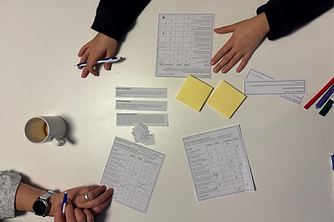
Picture this: Seeing through Epistemic Lenses
Engage with flexible epistemic identities.
This tool helps participants explore how natural scientists and social scientists approach knowledge differently.
It promotes interdisciplinary perspectives, critical awareness and respect for differences in epistemic identity.
⏱ 70 min | Discursive Power (Framing Power)

The power of representation
Practice active listening as a way to reflect on how representation shapes power.
This tool helps you reflect on how being represented—or not—sends subtle but powerful messages about whose perspectives matter. It encourages participants to explore how these dynamics shape who gets to contribute to shape a shared future.
⏱ 15–20 min | Structural Power

